Managing important business documents efficiently is essential for maintaining productivity, security and operational accuracy. From employee records and customer contracts to invoices, purchase orders and confidential reports, organizations handle large volumes of physical and digital files every day. Without a structured tracking process, documents can easily become misplaced, difficult to retrieve or accessible to unauthorized users.
A File Tracking System helps organizations monitor document locations, movements and access activities through technologies such as barcode scanning, RFID and digital document management. By improving document visibility and retrieval, businesses can reduce manual work, strengthen accountability and maintain organized records.
For organizations looking to modernize document handling, Stallion Global offers technology-driven Track and Trace solutions that support efficient identification, tracking and management processes.
What Is a File Tracking System?
A file tracking system is a solution designed to identify, monitor and manage the movement and location of physical documents or files within an organization. It helps employees determine where a document is stored, who has accessed or received it, and whether it has been returned to its designated location.
Depending on the implementation, the system can use barcode labels, RFID tags, scanning devices and document management software to maintain accurate records.
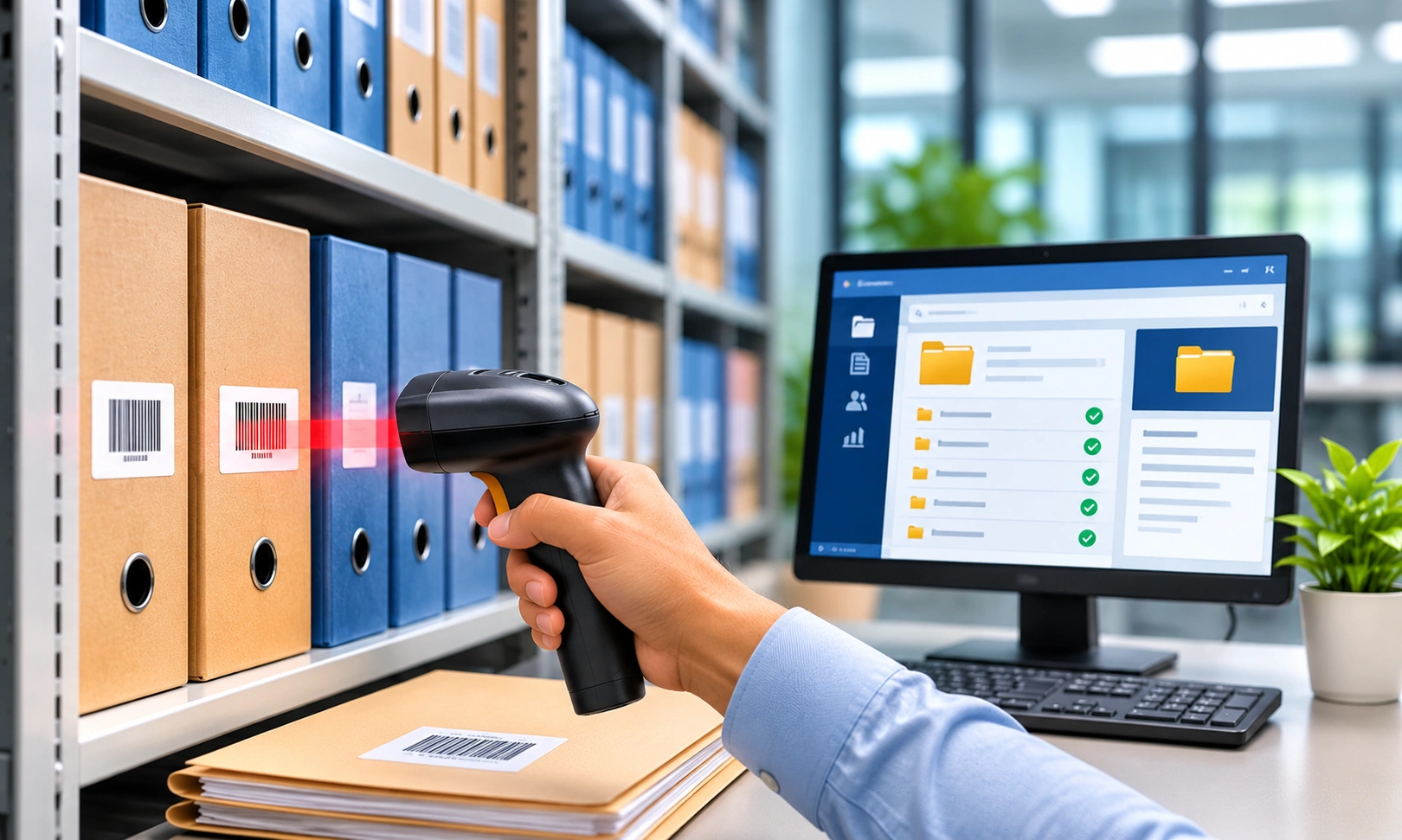
For example, when an employee requests a physical file, its barcode can be scanned during issue and return. The transaction can then be recorded in the software, providing visibility into the file’s movement and current status.
Unlike traditional registers and spreadsheets, automated document tracking reduces dependency on manual recordkeeping and makes document retrieval more systematic.
Reduce File Misplacement with Stallion Global’s Tracking Solutions!
Why Do Businesses Need a Document Tracking System?
Organizations handling hundreds or thousands of documents need a reliable way to maintain control over their records. Manual filing methods can create challenges, particularly when multiple departments access the same documents.
A document tracking system helps address these challenges through several operational benefits.
1. Faster Document Retrieval
Employees can identify file locations using digital records instead of searching through multiple cabinets or storage rooms. This reduces time spent locating important documents.
2. Improved Document Security
Access permissions and user activity records help organizations monitor document handling. These controls support better protection of confidential contracts, financial records and employee information.
3. Reduced File Misplacement
Recording file movements during issue, transfer and return helps minimize misplaced documents and improves accountability among departments.
4. Better Workflow Management
A structured document tracking process makes it easier for employees to request, share and return files. This supports smoother coordination between teams.
5. Reduced Administrative Work
Automated identification and recordkeeping reduce repetitive manual entries, helping employees focus on more important business activities.
How Does Barcode and RFID Technology Improve File Tracking?
Barcode and Radio Frequency Identification (RFID) technologies provide practical ways to identify and monitor physical documents.
Barcode-Based File Tracking
Barcode technology assigns a unique identification number to each file or document folder. A barcode label is attached to the file, allowing employees to scan it using a handheld barcode scanner.
When a file is issued, transferred or returned, the scan can update its transaction record in the connected software.
Key applications include:
- Identifying individual files and folders.
- Recording document issue and return transactions.
- Monitoring file movement between departments.
- Reducing manual data entry errors.
- Improving document search and retrieval.
Barcode-based identification is particularly useful for organizations that need an affordable and structured approach to physical file management.
RFID-Based File Tracking
RFID technology uses radio frequency signals to identify tagged items without requiring direct line-of-sight scanning.
RFID tags attached to document folders can be detected using compatible RFID readers and antennas. Depending on the system configuration, multiple tagged files can be identified within a reading area.
Common applications include:
- Identifying tagged files in storage areas.
- Supporting faster document inventory checks.
- Monitoring file movement through designated reading points.
- Improving visibility of document storage locations.
Barcode and RFID technologies can be selected according to document volumes, operational requirements and the level of automation needed.
Track, Manage, and Secure Your Business Files with Stallion Global
Key Features of an Effective File Management System
An effective file management system should provide more than basic document storage. It should help organizations maintain visibility and control throughout the document lifecycle.
Important capabilities include:
Centralized Document Records: Maintain organized information about file identification numbers, descriptions, departments and storage locations.
File Movement History: Record document issue, transfer and return activities to improve traceability.
Search and Retrieval: Enable employees to locate documents using relevant identification details or indexing information.
User Access Management: Apply appropriate permissions to control who can view, issue or manage documents.
Digital Recordkeeping: Maintain electronic records of document transactions and reduce dependence on physical registers.
Software Integration: Connect document management workflows with relevant enterprise applications, where supported, to improve information sharing.
Together, these capabilities help organizations establish a more organized and accountable document management process.
Where Are Document Tracking Solutions Used?
Document tracking solutions are useful across industries where accurate recordkeeping and quick document retrieval are important.
- Healthcare and Hospitals: Track patient records, medical reports, administrative documents and departmental files while maintaining appropriate access controls.
- Pharmaceutical Companies: Organize quality records, batch documentation, compliance-related files and manufacturing records.
- Government Offices: Manage application files, official correspondence, employee records and administrative documents.
- Educational Institutions: Track student records, examination documents, certificates and administrative files.
- Manufacturing Industries: Organize purchase orders, production records, quality inspection reports and technical documentation.
- Corporate Offices: Monitor contracts, invoices, financial documents, HR records and interdepartmental file movement.
For organizations managing large document inventories, automated identification and tracking can improve accountability and reduce delays caused by misplaced records.
How Stallion Global Supports Smarter File Tracking
Stallion Global provides barcode, RFID and Track and Trace technologies that help businesses improve identification, visibility and operational efficiency.
With experience in automatic identification and data capture (AIDC) solutions, Stallion Global supports organizations in selecting suitable hardware and software technologies based on their operational requirements.
Its technology ecosystem includes:
- Barcode Scanners: Handheld scanners for identifying and recording barcode-labelled documents.
- Barcode Printers: For producing identification labels used on folders, files and storage containers.
- RFID Readers and Antennas: For reading compatible RFID tags and supporting automated identification applications.
- RFID Tags and Labels: For uniquely identifying files and other trackable assets.
- File Management Software: To support organized document records and file management workflows.
- Software Integration: To connect identification technologies with relevant business applications where required.
By combining suitable identification hardware with software capabilities, businesses can move towards more structured document management and traceability.
Improve Document Visibility with Stallion Global
Efficient document management is essential for organizations that depend on accurate records, secure information and timely access to important files. Implementing the right tracking technologies can reduce manual processes, improve document traceability and support better operational control.
Stallion Global brings together barcode, RFID and software technologies to help businesses develop structured identification and Track and Trace solutions. With a focus on understanding business requirements and recommending suitable technologies, Stallion Global helps organizations take practical steps towards more efficient document management.
Improve File Visibility and Control with Stallion Global
Frequently Asked Questions
How does barcode-based document tracking work?
Each document or folder receives a unique barcode label. Employees scan the barcode during file issue, transfer or return, allowing the connected software to record the transaction.
What is the difference between barcode and RFID file tracking?
Barcode tracking requires a scanner to read a printed barcode, generally with a direct line of sight. RFID uses radio frequency signals to identify compatible tags without direct visual contact, and can support multiple-tag reading depending on the configuration.
Can document tracking be integrated with existing business software?
Yes. Depending on compatibility and implementation requirements, document tracking solutions can integrate with existing ERP platforms and other enterprise applications to improve information sharing and workflow management.
Which industries benefit from document tracking solutions?
Healthcare, pharmaceutical, manufacturing, government, education and corporate sectors can benefit from structured document identification, tracking and retrieval processes.