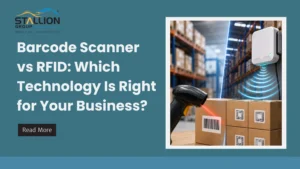
Businesses across retail, manufacturing, warehousing, logistics, healthcare, and supply chain operations need reliable ways to identify, track, and manage products, inventory, and assets. Two of the most widely used Automatic Identification and Data Capture (AIDC) technologies are barcode scanning and Radio Frequency Identification (RFID).
Barcode scanners are generally ideal for cost-effective, point-of-scan identification, while RFID is better suited to automated, multi-item tracking and applications requiring greater visibility. The right choice depends on your workflow, inventory, operating environment, budget, integration requirements, and level of automation.
This guide explains Barcode Scanner vs RFID, their key differences, applications, advantages, limitations, and how businesses can choose the right technology for their operations.
What Is a Barcode Scanner?
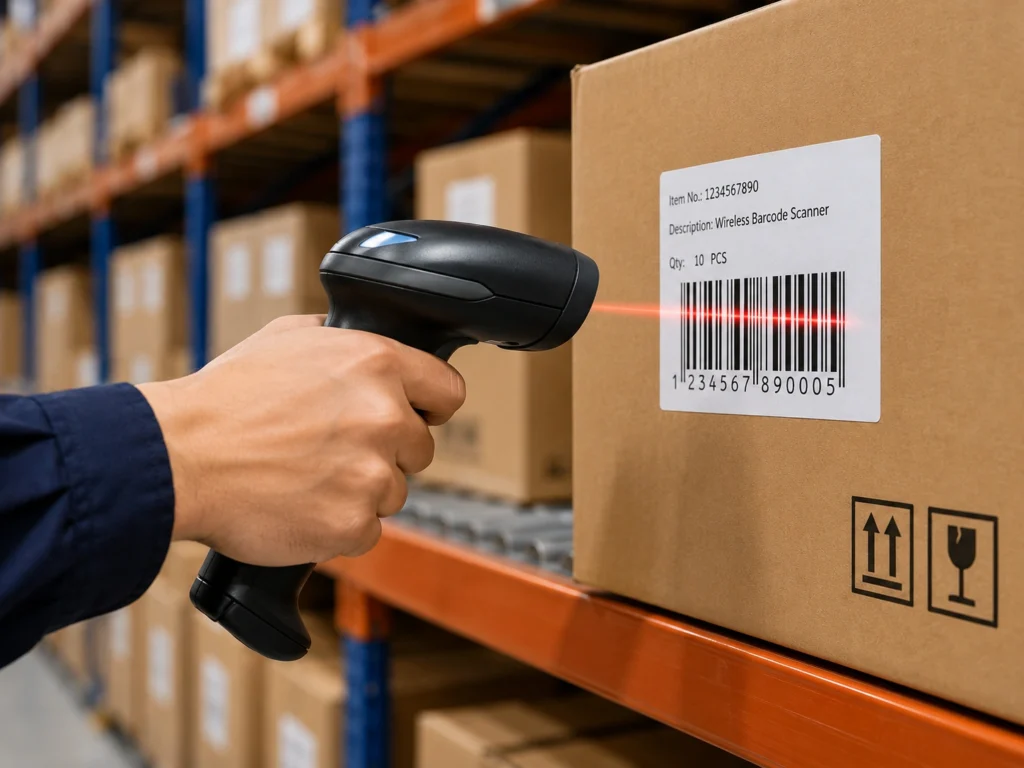
A barcode scanner is an AIDC device that reads information encoded in a printed barcode and converts it into digital data. Businesses use 1D barcodes, 2D barcodes, and QR codes for product identification, inventory management, asset tracking, billing, order processing, and logistics.
Barcode scanners are available in different configurations, including handheld scanners, fixed-mount scanners, presentation scanners, and mobile scanning devices. Leading manufacturers such as Honeywell, Datalogic, and Zebra Technologies provide barcode scanning solutions for different business environments.
Barcode technology is particularly effective when products or assets can be presented to a scanner at defined points in a workflow. Its relatively low implementation cost, ease of use, and compatibility with business software make it a practical choice for many organizations.
What Is RFID Technology?
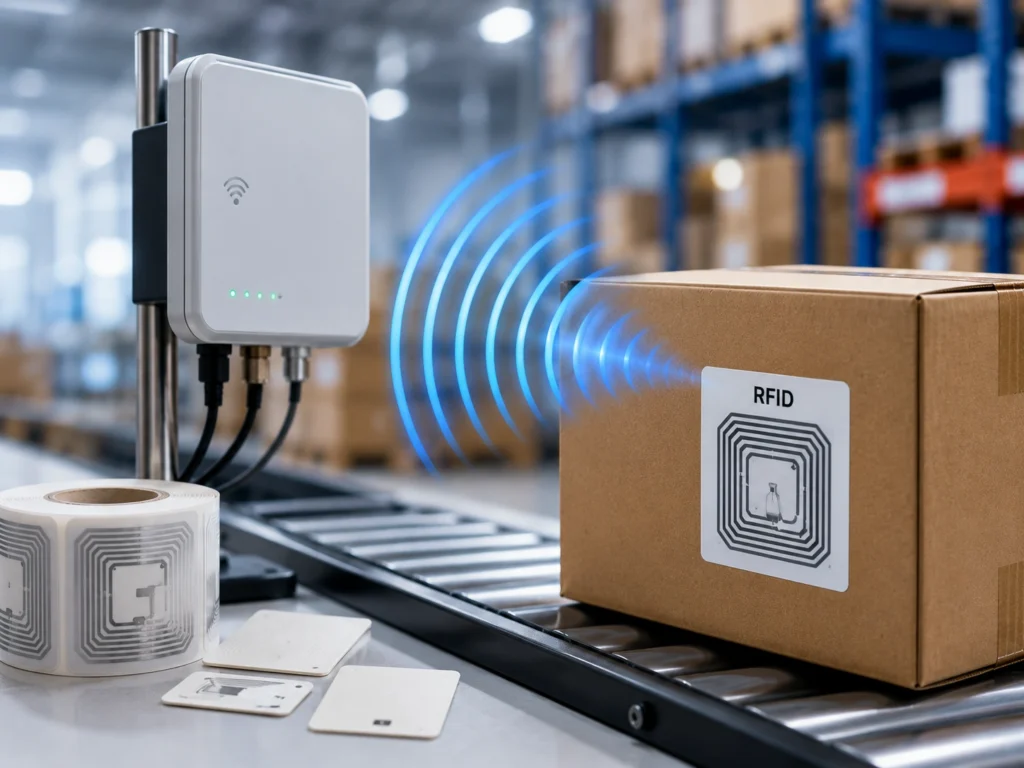
Radio Frequency Identification (RFID) uses radio waves to identify and track objects through RFID tags, readers, and antennas. Unlike conventional barcode scanning, RFID generally does not require the same direct line-of-sight between the reader and identification tag.
An RFID system can include RFID tags, RFID readers, antennas, middleware, and business software. Depending on the application, organizations can use passive RFID, active RFID, HF RFID, or UHF RFID.
UHF RFID is commonly used for applications requiring longer read ranges and identification of multiple tagged items. RFID can support inventory visibility, asset tracking, warehouse automation, manufacturing, logistics, supply chain management, and product traceability.
Technology providers such as Avery Dennison, Impinj, and Alien Technology are part of the wider RFID ecosystem.
Barcode Scanner vs RFID: Key Differences
The fundamental difference between these technologies is how they capture information.
Barcode scanning uses an optical system to read information printed on a label or product. RFID uses radio frequency communication between an RFID reader and tag.
Feature | Barcode | RFID |
Identification method | Optical scanning | Radio frequency |
Line of sight | Usually required | Generally not required |
Multiple-item reading | Usually individual | Multiple tags can be read together |
Data carrier | Printed barcode | RFID tag |
Read range | Typically short | Can be longer depending on system |
Typical implementation cost | Generally lower | Generally higher |
Best suited for | Point-of-scan identification | Automated tracking and visibility |
Therefore, Barcode Scanner vs RFID is not simply a choice between a traditional and advanced technology. Each is suited to different workflows and business requirements.
Find the Right Barcode & RFID Solution for Your Business
Barcode vs RFID for Inventory Management
Barcode inventory management systems are effective when employees scan products during receiving, storage, picking, packing, dispatch, stock verification, or billing. They provide a straightforward method for recording inventory movements at defined scanning points.
RFID inventory management can provide greater automation when organizations need to identify multiple tagged items without manually scanning each one. This can be useful for stock counting, asset tracking, returnable transport items, and inventory moving through designated reading zones.
The best option depends on inventory volume, product characteristics, required read range, operating environment, workflow complexity, and automation goals.
Barcode vs RFID for Warehouse and Logistics
Warehouses need to balance speed, accuracy, labor efficiency, cost, and scalability.
Barcode scanning works well for structured processes such as receiving, put-away, picking, packing, and dispatch. Handheld barcode scanners and mobile computers allow workers to capture information directly at the point of activity.
RFID can be beneficial when businesses need to identify multiple products or assets without locating and scanning every individual barcode. RFID readers and antennas can be integrated into portals, conveyor systems, loading areas, production lines, and automated checkpoints.
Businesses planning warehouse automation should also consider integration with Warehouse Management Systems (WMS), Enterprise Resource Planning (ERP) platforms, and other operational software.
Barcode vs RFID: Cost, Accuracy and Scalability
Barcode solutions generally require a lower initial investment because barcode labels and scanning hardware are widely available and economical for many applications.
RFID can involve additional investment in tags, readers, antennas, software, and infrastructure. However, the business case should be based on total cost of ownership and potential operational improvements rather than hardware cost alone.
Accuracy depends on implementation and workflow design. A properly configured barcode system can provide highly reliable data capture, while RFID can reduce manual scanning and improve visibility in suitable environments. RFID performance can also be influenced by tag placement, materials, reader configuration, installation, and operating conditions.
Businesses should therefore evaluate workflow efficiency, integration requirements, maintenance, scalability, operating costs, and expected return on investment before making a decision.
When Should You Choose Barcode Scanning?
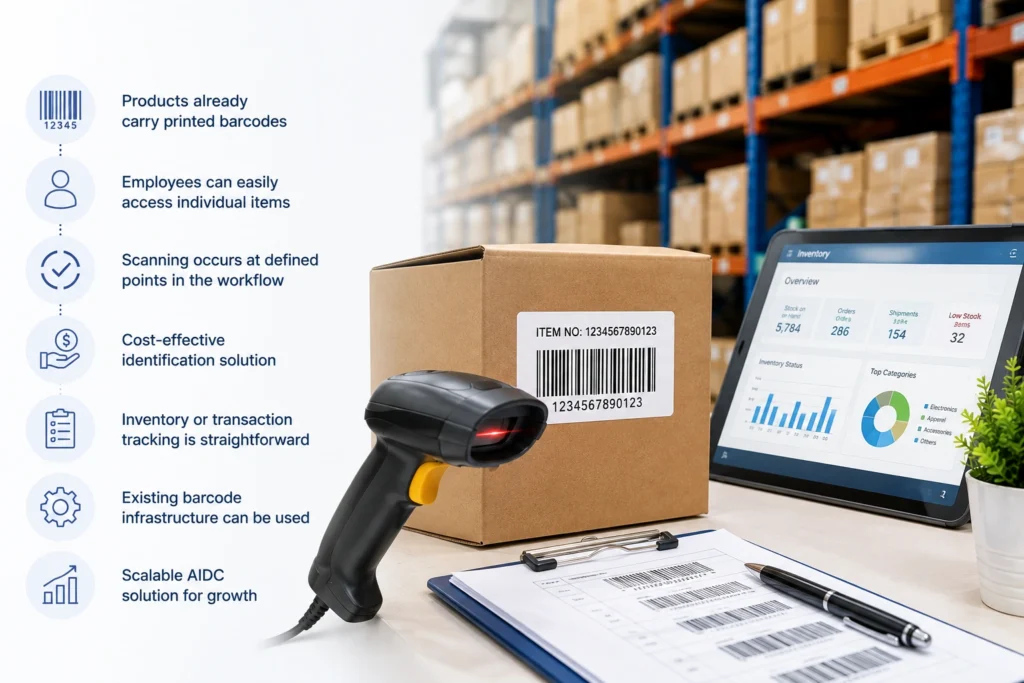
Barcode technology is often a strong choice when:
- Products already carry printed barcodes.
- Employees can easily access individual items.
- Scanning occurs at defined points in the workflow.
- The business requires a cost-effective identification solution.
- Inventory or transaction tracking is relatively straightforward.
- Existing barcode infrastructure can be used.
- The organization wants a scalable AIDC solution.
Barcode technology is widely used across retail, distribution, healthcare, manufacturing, warehousing, logistics, and service operations.
When Should You Choose RFID?
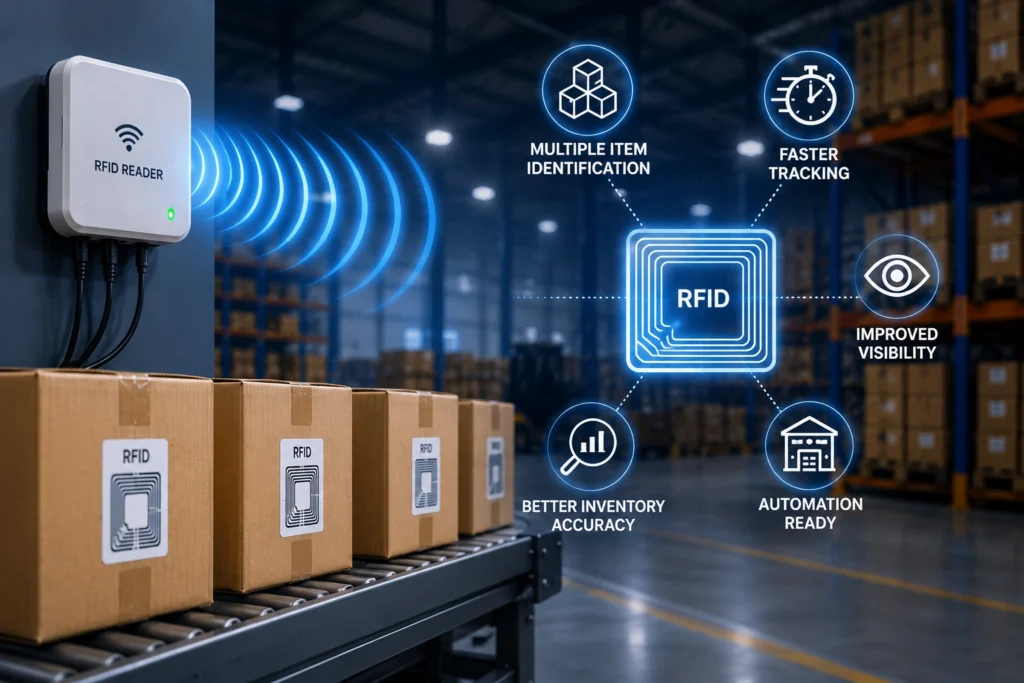
RFID may be more suitable when:
- Multiple items need to be identified simultaneously.
- Manual scanning creates operational bottlenecks.
- Line-of-sight scanning is inconvenient or impractical.
- Automated tracking is a priority.
- The business needs improved asset visibility.
- Items move through fixed reading zones.
- The organization is increasing automation across warehouse or supply chain operations.
RFID can be particularly valuable for asset tracking, inventory visibility, manufacturing, logistics, warehouse automation, and applications requiring faster identification of multiple items.
Upgrade Your Inventory Management with Barcode & RFID
Can Barcode and RFID Work Together?
Yes. Businesses do not always need to select one technology exclusively.
Barcode and RFID solutions can complement each other within the same operation. For example, a company can use barcodes for routine product identification while implementing RFID for high-value assets, bulk inventory counting, automated checkpoints, or specific warehouse processes.
This hybrid approach allows organizations to use existing barcode infrastructure while introducing RFID where it provides a clear operational benefit.
How to Choose the Right Technology
When evaluating Barcode Scanner vs RFID, consider the following:
- What products, inventory, or assets need to be tracked?
- How many items need to be identified at one time?
- Is direct line-of-sight scanning practical?
- What read distance is required?
- How much automation does the workflow require?
- What implementation and operating costs are acceptable?
- Does the solution need WMS, ERP, POS, or other software integration?
- What environmental conditions will the equipment operate in?
- How will the system scale with business growth?
- Would a combination of barcode and RFID deliver better results?
A professional AIDC assessment can help determine the right combination of hardware, software, identification media, consumables, and integration for the specific operation.
Barcode and RFID Solutions from Stallion Global
Stallion Global provides barcode, RFID, automation, POS, software, and consumables solutions designed around real business requirements.
With extensive experience in AIDC technologies, Stallion works with organizations to understand their workflows and identify suitable solutions for inventory management, asset tracking, warehouse operations, retail, manufacturing, logistics, and supply chain applications.
The solution portfolio can include barcode scanners, barcode printers, mobile computers, RFID readers, RFID tags, antennas, software, and related technologies from established industry manufacturers.
Instead of selecting technology based only on hardware specifications, Stallion focuses on matching the solution with the customer’s workflow, operating environment, existing infrastructure, integration requirements, and future growth plans.
From Kochi, Kerala, India, Stallion supports businesses across India and the Middle East, including organizations operating in the UAE, Qatar, and Oman. These markets have growing requirements for efficient inventory management, warehouse automation, asset tracking, retail technology, logistics, and supply chain visibility.
Make the Right Choice for Your Business
The best identification technology is not necessarily the most advanced one. It is the technology that effectively solves your operational requirements.
Whether your business needs barcode scanners for reliable point-of-use data capture, RFID for automated tracking, or a combination of both, the right AIDC strategy can improve visibility, productivity, traceability, and scalability.
When comparing Barcode Scanner vs RFID, start with your business process and operational goals before selecting the technology. With the right solution, barcode and RFID technologies can provide a strong foundation for smarter inventory management, warehouse automation, asset tracking, retail operations, manufacturing, and supply chain management.
Get a Tailored Barcode & RFID Solution for Your Business
Frequently Asked Questions
Which is better for inventory management?
It depends on the workflow. Barcodes work well for structured scanning processes, while RFID can be useful when businesses require bulk identification, automated data capture, or improved inventory visibility.
Is RFID more expensive than barcode?
RFID can have higher initial implementation costs because it may require tags, readers, antennas, software, and supporting infrastructure. Businesses should compare total cost of ownership and expected operational benefits rather than only the initial purchase price.
Can a business use barcode and RFID together?
Yes. A hybrid approach can allow businesses to use barcode scanning for routine identification and RFID for applications where automated or multi-item tracking provides greater value.
Which technology is better for warehouse automation?
Both can support warehouse automation. Barcode scanning is effective for scan-based workflows, while RFID can support automated identification at portals, conveyor points, checkpoints, and other suitable locations.