Wrong shipments are a common challenge in warehouse and distribution operations. Sending the wrong product, incorrect quantity, or an order intended for another customer can result in returns, additional shipping costs, delayed deliveries, and reduced customer satisfaction. As order volumes increase, manual checking alone may not provide the accuracy and consistency businesses need.
Barcode verification systems help warehouses validate products at critical stages, from order picking and packing to final dispatch. By connecting barcode scanning with order information and warehouse workflows, businesses can identify mismatches before goods leave the facility.
For manufacturers, distributors, and logistics providers, implementing a structured barcode verification process can improve dispatch accuracy, inventory visibility, and operational efficiency.
What Causes Wrong Shipments in Warehouses?
Shipping errors can occur at several points in the order fulfilment process. Common causes include:
- Incorrect order picking: Employees select a product with a similar appearance or a different Stock Keeping Unit (SKU).
- Quantity mismatches: The number of items picked does not match the quantity ordered.
- Packing errors: Products belonging to different orders are mixed during packing.
- Incorrect labelling: Packages receive the wrong shipping label or customer details.
- Manual data entry: Human errors during order processing lead to incorrect records.
- Inadequate dispatch checks: Shipments leave the warehouse without a final verification step.
These mistakes can affect businesses handling high-volume orders, multiple product variants, or complex distribution networks. Introducing barcode-based order verification helps establish a consistent method for checking products against order requirements.
Prevent Wrong Shipments with Smarter Barcode Solutions!
How Do Barcode Verification Systems Prevent Wrong Shipments?
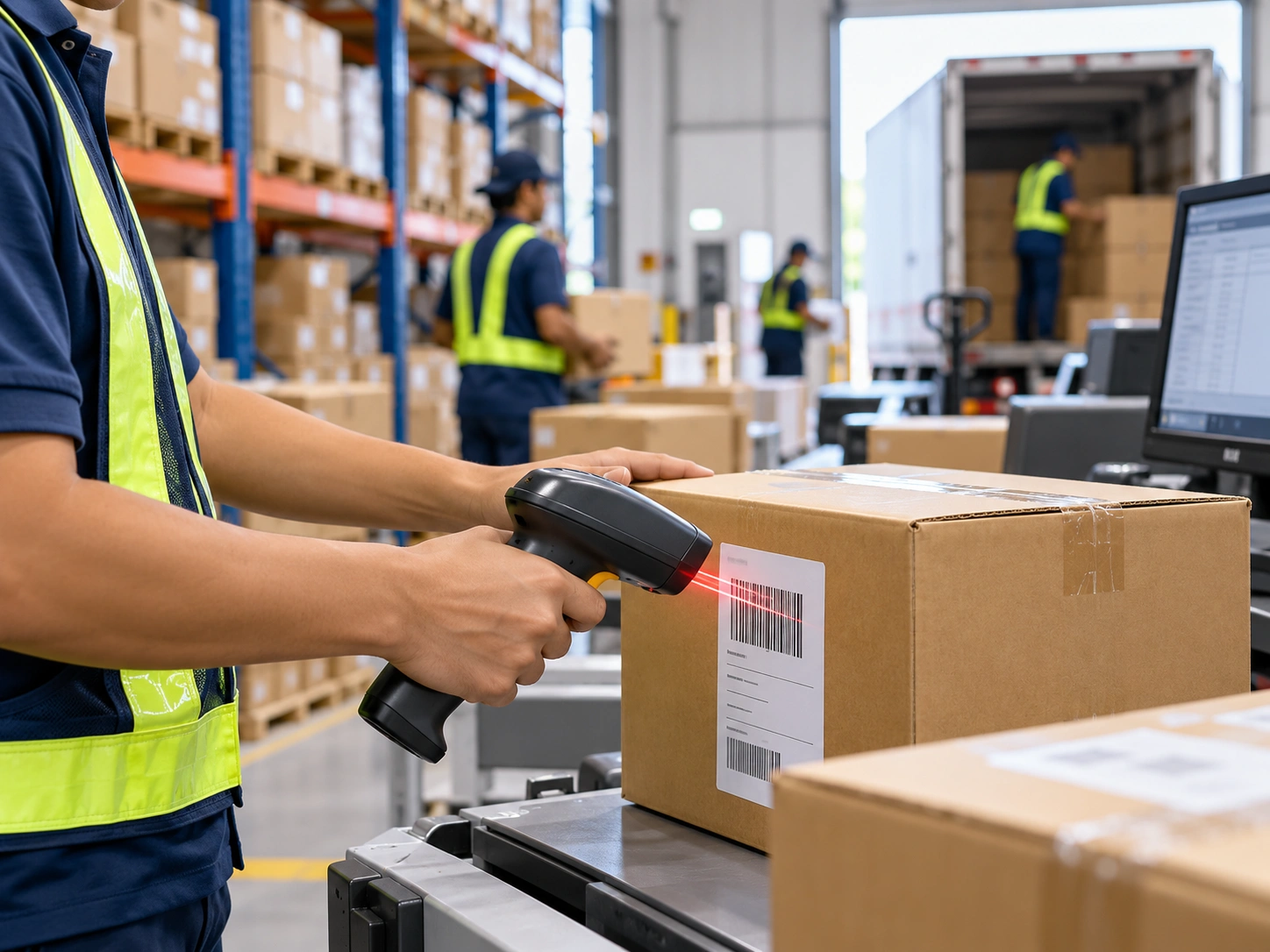
Barcode verification systems use barcode scanners and software to compare scanned product information with the expected order details. Instead of relying entirely on visual inspection, warehouse employees can validate items using machine-readable product identifiers.
The process generally involves the following steps.
1. Verify Products During Order Picking
When an order is assigned, the warehouse employee scans the product barcode before picking the item. The system checks the scanned SKU against the order details and can flag a mismatch if the wrong product is selected.
This approach helps reduce picking errors, particularly when products have similar packaging, sizes, or model numbers.
2. Confirm Quantities During Packing
After picking, employees scan items during packing to verify that the correct products and quantities are included. Depending on the software configuration, the workflow can identify missing, duplicate, or unexpected items before the package is sealed.
Packing verification is especially valuable for distributors and e-commerce fulfilment centres processing multiple orders simultaneously.
3. Validate Shipments Before Dispatch
Dispatch verification provides a final opportunity to catch errors before goods leave the warehouse. Employees scan the package or product identifiers and compare them with the relevant sales order, dispatch record, or shipping manifest.
If an incorrect item or order is detected, the configured workflow can alert the employee and require correction or approval before dispatch continues.
4. Update Warehouse Records
When integrated with a Warehouse Management System (WMS) or another inventory application, barcode scanning can support timely updates to stock movements, order status, and dispatch records.
This creates better traceability and helps warehouse teams investigate discrepancies when they occur.
Key Benefits of Barcode-Based Shipment Verification
Implementing barcode scanning across warehouse operations can provide several practical benefits.
Improved dispatch accuracy: Product and order checks help identify mismatches before shipment, reducing preventable fulfilment errors.
Fewer returns and re-shipments: Catching mistakes before dispatch can reduce the cost and administrative effort associated with correcting incorrect deliveries.
Better inventory accuracy: Scanning at picking and dispatch helps maintain more reliable stock movement records when connected to inventory software.
Faster order processing: Automated validation reduces dependence on repeated manual checks and makes verification more consistent.
Greater traceability: Scan records can help teams review order handling, identify where an error occurred, and improve warehouse procedures.
The results depend on barcode quality, software integration, employee training, and the accuracy of the underlying order data. Scanning alone cannot prevent every shipping error, but a well-designed verification workflow can significantly strengthen dispatch controls.
Make Every Shipment Count with Smart Barcode Verification!
Choosing the Right Barcode Verification Solution
Selecting suitable technology requires understanding the warehouse environment, product types, order volumes, and existing software.
Consider these factors when evaluating a solution:
- Scanner requirements: Choose handheld, corded, cordless, or mobile scanning devices according to the picking and dispatch workflow.
- Barcode compatibility: Ensure the equipment supports the 1D or 2D barcodes used on product labels, cartons, and packages.
- Software integration: Confirm that the solution can communicate with the existing WMS, ERP, or order management system where required.
- Verification rules: Define how the system should handle incorrect products, quantity mismatches, duplicate scans, and unrecognised barcodes.
- Reporting and traceability: Check whether the solution records relevant scans, exceptions, and verification outcomes.
- Scalability: Select equipment and workflows that can accommodate future increases in order volumes and operational complexity.
Businesses should also assess barcode label readability, network availability, environmental conditions, and employee training before implementation.
How Stallion Global Supports Warehouse Barcode Operations
Stallion Global, brings over 30 years of experience in technology solutions and serves businesses across India and the Middle East. With a customer base of more than 5,000 organisations and established technology partnerships, Stallion Global supports businesses seeking reliable identification, data capture, and operational technology solutions.
As a Honeywell Diamond Partner, Stallion Global provides access to barcode scanning technologies designed for business and industrial environments. Its broader technology portfolio also includes solutions from established brands such as Datalogic, supporting different identification and data capture requirements.
For warehouse and logistics operations, selecting the right barcode scanner is only one part of the process. Businesses should consider how scanning devices fit into their picking, packing, inventory, and dispatch workflows. The appropriate solution depends on operational requirements, software compatibility, product identification methods, and the level of verification needed.
Stallion Global can help businesses evaluate their barcode scanning requirements and identify suitable technologies for their operational environment. Actual shipment validation depends on the software, integration, and verification rules implemented alongside the scanning hardware.
Conclusion
Preventing wrong shipments requires more than a final visual inspection. Businesses need reliable product identification, consistent verification procedures, and accurate order information throughout the fulfilment process.
Barcode verification systems can help warehouse teams detect picking mistakes, confirm packed items, and validate shipments before dispatch. When supported by suitable scanning hardware, integrated software, and clear operating procedures, they can improve order accuracy and strengthen warehouse control.
Improve Warehouse Accuracy with Stallion Global!
Frequently Asked Questions
How do barcode verification systems reduce shipping errors?
They compare scanned product or package identifiers with expected order information at picking, packing, and dispatch stages. Configured alerts help employees identify mismatches before goods are shipped.
Can barcode scanning be integrated with a Warehouse Management System?
Yes. Compatible barcode scanners can work with a WMS to validate products, record stock movements, and update order statuses. Integration capabilities depend on the devices and software used.
Are 2D barcodes better than 1D barcodes for warehouse operations?
Not always. Both can support product identification. The right format depends on data requirements, label space, scanning conditions, and compatibility with existing systems.
Which businesses benefit from barcode shipment verification?
Manufacturers, wholesalers, e-commerce fulfilment centres, third-party logistics providers, and retail distribution warehouses can benefit from structured barcode verification workflows.