Businesses across manufacturing, warehousing, healthcare, IT and logistics depend on physical assets to maintain daily operations. From industrial machinery and computers to tools, vehicles and office equipment, knowing what assets a company owns, where they are located and who is responsible for them is essential for operational efficiency. However, spreadsheets and manual registers can become difficult to maintain as businesses expand across departments and locations.
Choosing the right asset tracking software helps organisations improve asset visibility, maintain accurate records, simplify audits and make better decisions about equipment utilisation. The key is to select a solution that fits your business requirements, existing infrastructure and long-term growth plans.
What Is Asset Tracking Software?
Asset tracking software helps businesses record, identify, monitor and manage physical assets throughout their operational lifecycle. Depending on its capabilities, it can maintain information such as asset identification numbers, locations, assigned users, purchase details, maintenance history and current status.
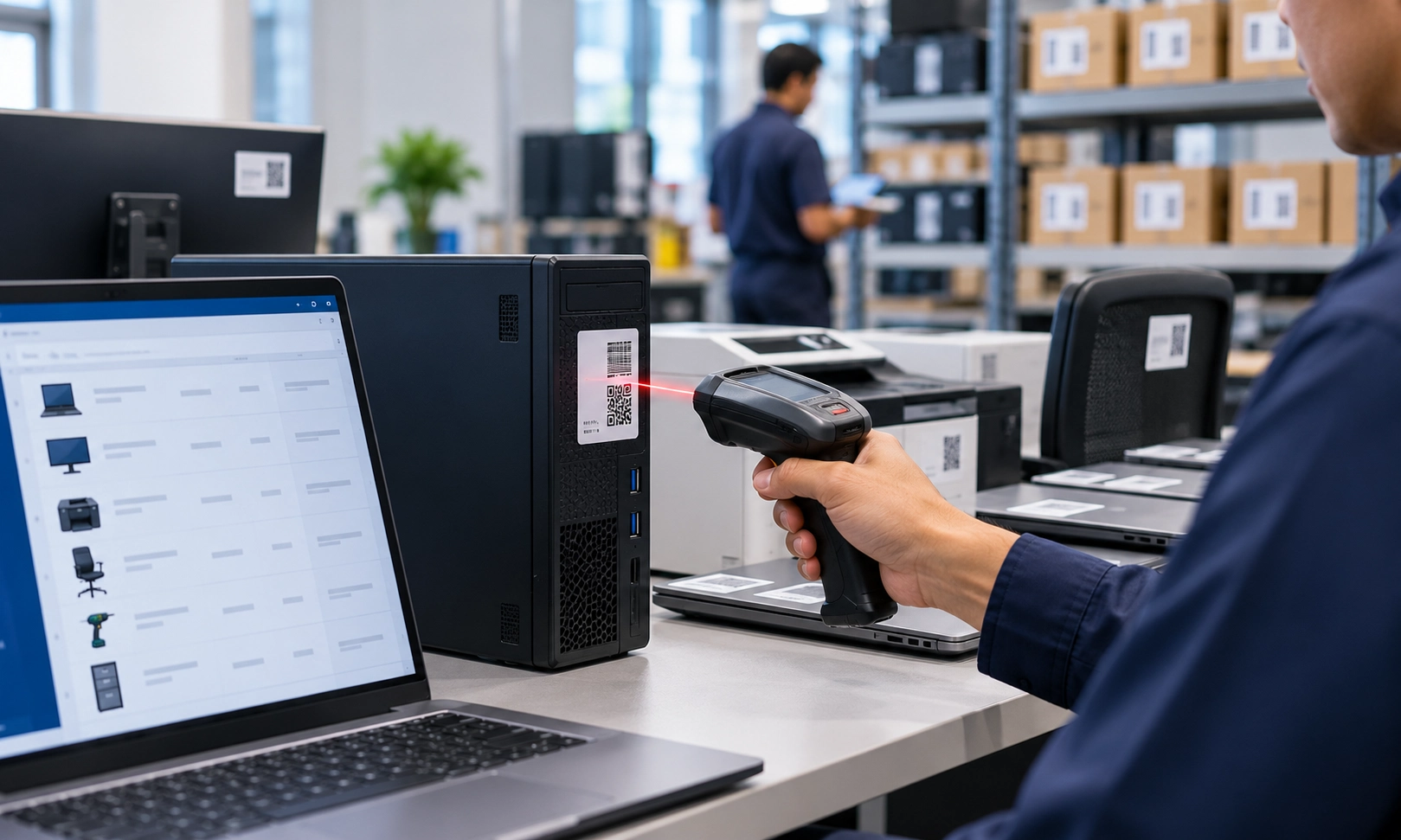
When combined with barcode labels, QR codes or Radio Frequency Identification (RFID), the system connects physical assets with digital records. Employees can scan or identify an asset to retrieve its information, update its location or verify its presence during an audit.
Unlike a basic spreadsheet, a suitable asset tracking system can support structured workflows, centralised reporting and improved accountability. The available features depend on the software, tracking technology and implementation.
Why Do Businesses Need an Asset Tracking System?
Poor asset visibility can lead to misplaced equipment, duplicate purchases, delayed maintenance and time-consuming physical audits. When records are outdated, managers may struggle to determine whether equipment is available, assigned to an employee or located at another facility.
A structured tracking process helps businesses maintain reliable asset registers and improve control over equipment movement. It can also support asset utilisation analysis, maintenance planning and lifecycle cost management.
For organisations with multiple branches, factories or warehouses, centralised records can make it easier to compare information across locations. These benefits depend on accurate data capture, consistent operating procedures and appropriate system configuration.
Simplify Asset Tracking with Smart Business Solutions!
Key Features to Look for in Asset Tracking Software
Before choosing a solution, evaluate the features that address your actual operational challenges rather than selecting a platform based only on its feature list.
1. Centralised Asset Register
A centralised asset register should provide a consistent record for each item. Look for support for asset IDs, descriptions, categories, serial numbers, locations, assigned employees, purchase dates and relevant warranty information.
Accurate records establish a reliable foundation for tracking, reporting and asset audits.
2. Barcode and QR Code Tracking
Barcode asset tracking provides a practical way to identify equipment through printed labels and compatible scanners. QR codes can also link users to relevant asset records when supported by the system.
These methods are suitable for many office environments, IT departments and equipment inventories where employees can scan individual items during verification or movement.
3. RFID Asset Tracking
RFID uses radio-frequency communication to identify tagged items through compatible readers. Unlike conventional barcode scanning, RFID does not generally require a direct line of sight between the reader and the tag.
This can make RFID asset tracking useful for businesses managing large asset volumes or conducting frequent audits. Tag selection, reader placement, materials and the operating environment should be evaluated before implementation.
4. Asset Movement and Assignment Tracking
Businesses should be able to maintain records of asset transfers between departments, locations and employees. Where supported, assignment and movement histories help establish accountability and simplify investigations when equipment cannot be located.
5. Reporting and Audit Management
Reporting tools can help managers review asset distribution, identify missing records and reconcile physical assets with the asset register. Consider whether the solution supports custom reports, data exports and audit histories that match your organisation’s reporting requirements.
6. Integration with Existing Business Systems
Check whether the platform can integrate with relevant enterprise resource planning (ERP), accounting, inventory management or maintenance systems. Compatible integrations can reduce duplicate data entry and help maintain consistent information across departments.
7. Scalability and Access Controls
Choose a solution that can accommodate additional assets, users, departments and locations as your business grows. Role-based access permissions, secure authentication and suitable data backup arrangements are also important when protecting business records.
Barcode vs RFID: Which Asset Tracking Technology Is Right for You?
The right tracking technology depends on the number of assets, the frequency of audits, the operating environment and your budget.
Barcode and QR code systems typically require an employee or authorised user to scan an individual label. They can be a cost-effective choice for businesses with manageable asset volumes and established manual verification procedures.
RFID can identify compatible tagged items without requiring direct visual alignment, making it useful for selected high-volume tracking and audit applications. However, RFID may require additional tags, readers and infrastructure, increasing implementation costs.
Some organisations benefit from combining both methods. For example, barcode scanning may suit office equipment while RFID supports selected warehouse or industrial assets. A practical assessment helps determine whether one technology or a combination will deliver the required results.
Discover the Right Asset Tracking Solution for Your Business!
How to Choose the Right Solution for Your Business
Assess Your Operational Requirements
Start by identifying the assets you need to track, their approximate quantity, where they are used and how frequently they move. Determine whether your priority is asset identification, employee assignment, location updates, maintenance records or faster audits.
Evaluate the Total Cost of Ownership
Consider more than the initial software price. Include tags and labels, scanners, RFID readers where required, implementation, staff training, system integration, maintenance and ongoing subscription or support fees.
Compare the expected costs with measurable operational improvements rather than relying on general claims about savings.
Request a Demonstration or Pilot
Test the shortlisted solution using representative assets and real business workflows. Check whether employees can locate records easily, update assignments, complete audits and generate useful reports. For RFID deployments, test the selected tags and readers in the actual operating environment.
Review Implementation and Support
Ask about onboarding, data migration, staff training, technical support and future upgrades. A clear implementation plan helps establish responsibilities and reduces disruption during the transition from manual records.
Asset Tracking Solutions from Stallion Global
With over 30 years of experience in the technology industry, Stallion Global helps businesses explore identification and automation technologies that support operational efficiency and process visibility. The company serves 5,000+ customers and has 578+ partnerships.
Stallion’s expertise in Automatic Identification and Data Capture (AIDC), including barcode and RFID technologies, is relevant to organisations evaluating asset identification and tracking solutions. These technologies can help connect physical equipment with digital records when configured with compatible asset management software and devices.
For businesses evaluating asset management solutions, the right approach depends on asset types, tracking requirements, existing systems and future expansion plans. Assessing these factors helps organisations identify technologies that fit their operational needs rather than investing in unnecessary capabilities.
Based in Kochi, Kerala, Stallion Global serves businesses across India and the Middle East. Organisations looking to improve asset visibility, streamline identification processes or explore barcode and RFID technologies can contact Stallion Global to discuss their requirements.
Conclusion
Selecting the right asset tracking solution begins with understanding how your business manages equipment today and where existing processes fall short. By evaluating identification technologies, asset records, integrations, reporting capabilities and long-term costs, organisations can make informed decisions that support better asset visibility and accountability.
Stallion Global brings over 30 years of technology industry experience and expertise in barcode and RFID solutions. Contact the team to discuss your business requirements and explore suitable technologies for improving asset identification and operational efficiency.
Improve Asset Visibility with Stallion Global!
Frequently Asked Questions
How does asset tracking software help businesses?
It helps businesses maintain asset records, monitor assignments and locations, support audits and improve visibility into equipment usage. The benefits depend on the features implemented and the accuracy of the recorded information.
Is barcode or RFID better for asset tracking?
Barcodes are often suitable for cost-conscious applications where individual scanning is practical. RFID can be useful for selected applications requiring faster identification of multiple tagged items. The best choice depends on asset volume, environment, infrastructure and budget.
Can asset tracking systems support multiple business locations?
Many solutions support multiple locations, departments and asset assignments. Businesses should confirm that the selected platform can manage their required organisational structure and provide suitable reporting across sites.
What should businesses consider before selecting an asset tracking solution?
Evaluate asset types, identification technology, software features, integration requirements, security, scalability, implementation support and total cost of ownership. A demonstration or pilot can help verify suitability before deployment.