Choosing the right POS System for Retail Business can have a direct impact on billing efficiency, inventory visibility, customer service, and store operations. A modern Point of Sale solution does much more than process transactions. It can connect billing, barcode scanning, inventory, payments, receipt printing, reporting, and customer information within a unified retail environment.
For retailers operating in India and the Middle East, the selection process should also consider local tax requirements, payment methods, hardware compatibility, business size, number of outlets, and future expansion. The right solution should fit the way your business operates today while remaining flexible enough to support tomorrow’s requirements.
With more than three decades of experience in AIDC and business automation, Stallion Global helps businesses evaluate POS, barcode, RFID, and automation technologies according to their operational needs, industry, and growth plans.
What Is a Retail POS System?
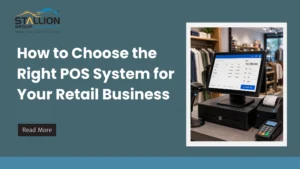
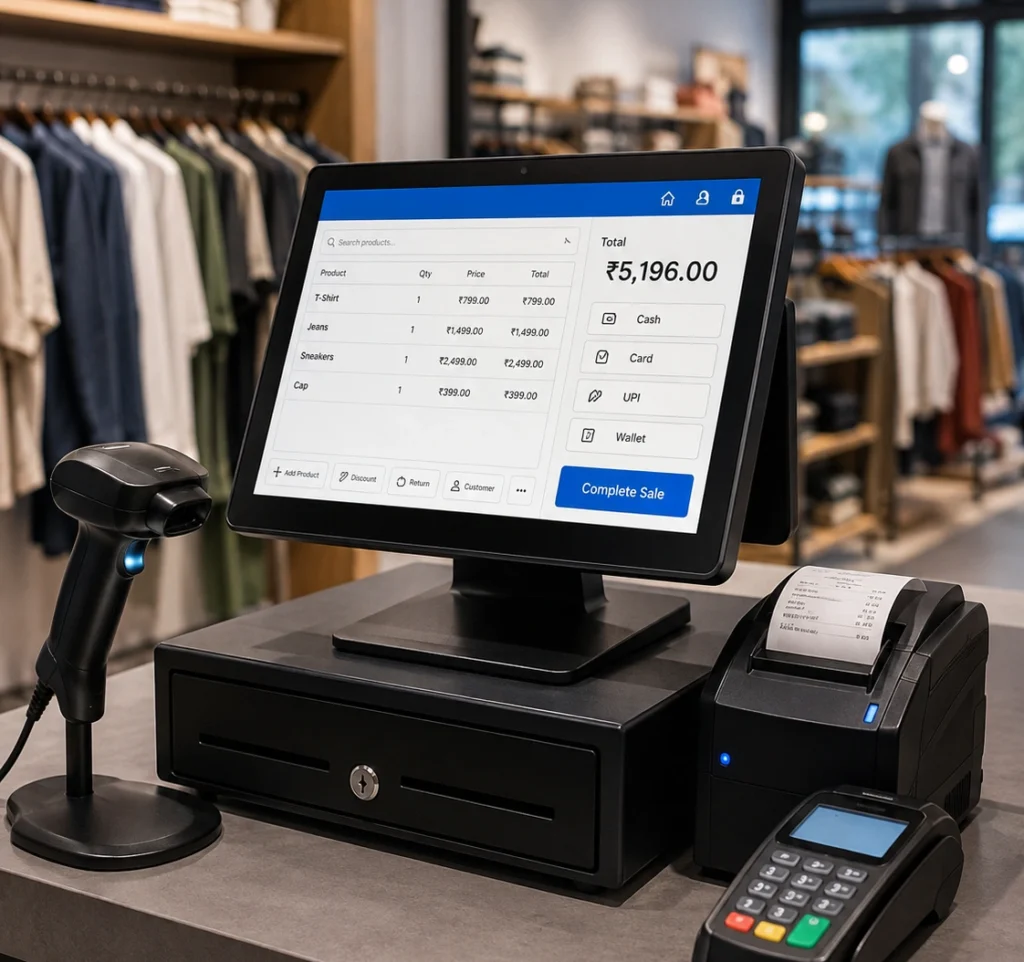
A retail POS system combines POS software and POS hardware to manage transactions when customers purchase products. Depending on the business, a complete setup may include a POS terminal, touchscreen display, barcode scanner, receipt printer, cash drawer, customer display, and payment device.
Modern POS software can also connect sales with inventory management, product catalogues, customer records, payment processing, and business reporting. This gives retailers greater visibility into transactions and business performance.
For companies with multiple outlets, a centralized solution can provide consolidated information across stores, helping management monitor sales, products, and stock from a common platform.
Why Does Choosing the Right POS System Matter?
A POS solution should address actual operational challenges rather than simply replace manual billing. Slow checkout, pricing errors, disconnected inventory records, and excessive data entry can affect productivity and customer satisfaction.
A well-planned POS System for Retail Business can help retailers:
- Speed up checkout and billing
- Reduce manual transaction entry
- Improve product and stock visibility
- Support barcode-based billing
- Process different payment methods
- Manage returns and discounts
- Generate sales and business reports
- Monitor store performance
- Connect retail hardware and software
- Support multiple locations
The best choice depends on your products, transaction volume, workflow, technology environment, and growth plans.
Find the Right POS Solution for Your Retail Business
How to Choose a Warehouse Management System
1. Fast and Accurate Billing
Checkout is a critical part of the retail experience. POS software should make product selection, barcode scanning, discounts, returns, and invoice generation simple for employees.
An efficient retail billing system can help reduce waiting time and improve transaction accuracy during busy periods.
2. Barcode Scanner Integration
For retailers managing large product catalogues, barcode scanning can make product identification faster and more reliable.
A POS system should work with compatible 1D and 2D barcode scanners, allowing staff to scan an item and retrieve information such as product name, price, SKU, and applicable billing details.
This is particularly useful for supermarkets, grocery stores, apparel outlets, electronics retailers, pharmacies, departmental stores, and other high-volume retail environments.
3. Inventory Management
A connected sales and inventory workflow allows retailers to maintain better visibility over stock movement.
When evaluating a solution, consider capabilities such as:
- SKU and product management
- Stock availability
- Low-stock alerts
- Stock transfers
- Purchase management
- Inventory adjustments
- Multi-location inventory
- Product categorization
- Inventory reporting
The objective is to make product and stock information more accessible to the people responsible for purchasing, sales, and store management.
4. Payment Flexibility
Retail businesses may accept cash, cards, UPI, and other digital payment methods depending on their market.
Indian retailers may require integrations suitable for their local payment environment, while businesses in UAE, Oman, Qatar, and other Middle Eastern markets may have different payment and tax requirements.
Before implementation, confirm that the POS solution supports the payment hardware and services required for your specific business and location.
5. Reporting and Analytics
Transaction information becomes more valuable when it can support business decisions.
Useful reports may include:
- Daily and monthly sales
- Product-wise sales
- Store-wise performance
- Payment summaries
- Returns and refunds
- Inventory movement
- Best-selling products
- Staff performance
- Customer purchasing trends
These insights can help retailers understand sales patterns, identify fast-moving products, monitor branch performance, and make better operational decisions.
6. Multi-Store Management
Businesses with multiple outlets need more than a standalone checkout application.
A POS system for multi-store retail can provide centralized visibility while allowing individual branches to carry out their daily transactions. Depending on the solution, management may be able to coordinate product information, pricing, inventory, and sales reporting across locations.
This becomes increasingly important as a retail business expands into new cities or markets.
7. Scalability and Integration
A POS system should be able to adapt as the business grows. Before purchasing, check its compatibility with:
- ERP systems
- Accounting software
- E-commerce platforms
- Inventory applications
- Barcode scanners
- Receipt printers
- Payment terminals
- Customer management systems
Choosing a scalable platform can reduce the need for major technology changes when your product range, transaction volume, workforce, or store network increases.
Upgrade Your Retail Business with the Right POS System
POS Requirements for India and the Middle East
The right POS configuration depends on the market in which your business operates.
POS for Retail Businesses in India
Indian retailers may need capabilities related to GST billing, HSN information, barcode-based billing, UPI payments, inventory management, digital receipts, and accounting integration.
Businesses should also assess product catalogue requirements, billing workflows, payment infrastructure, reporting needs, and future expansion before selecting a system.
POS Solutions for the Middle East
Retail requirements can vary between countries across the Middle East. Businesses operating in UAE, Oman, and Qatar may need configurations that reflect their respective tax, invoicing, payment, and reporting environments.
For this reason, retailers should confirm local requirements before implementation rather than assuming that a single configuration will be suitable for every country.
Businesses operating across multiple markets can benefit from working with a technology provider that understands different operational environments and can help coordinate the required hardware, software, and integrations.
How to Choose the Right POS System for Your Business
Before investing in a POS System for Retail Business, consider these questions:
What type of retail business do you operate?
A supermarket, fashion store, pharmacy, electronics retailer, and specialty store can have completely different checkout, inventory, and reporting requirements.
How many products do you manage?
Businesses with extensive product catalogues should prioritize efficient barcode scanning, structured product management, and reliable stock information.
How many outlets do you operate?
If you have multiple branches, consider centralized management, consolidated reporting, and synchronization between locations.
What hardware do you need?
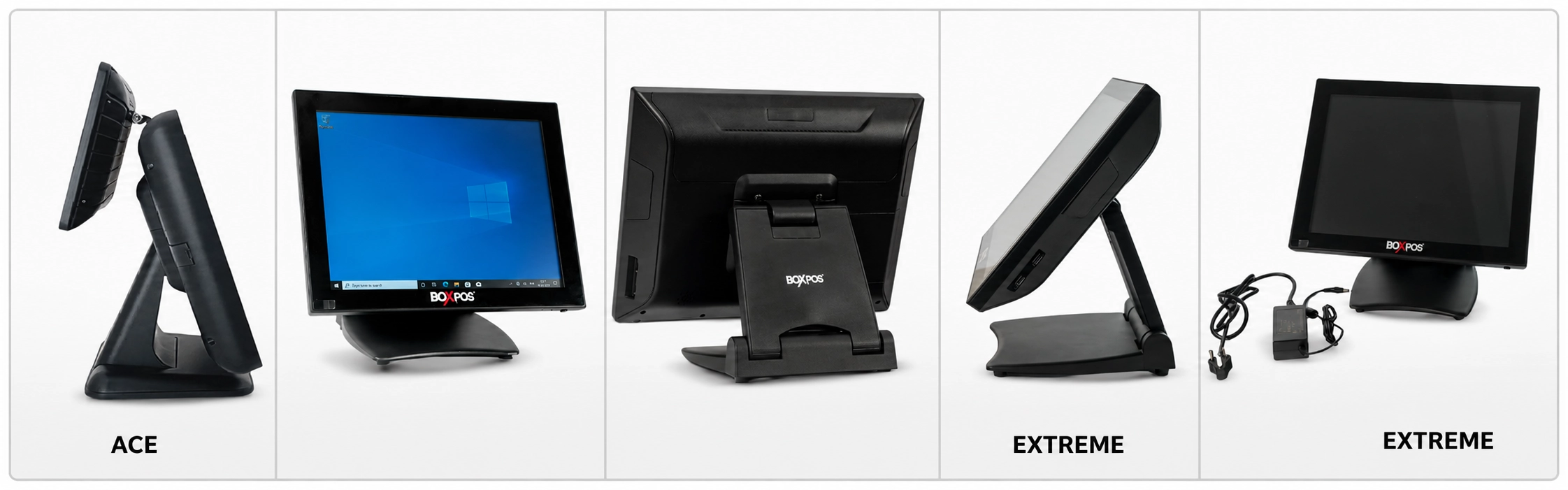
Check compatibility with barcode scanners, POS terminals, receipt printers, cash drawers, customer displays, and payment devices.
Do you plan to expand?
Choose a solution that can accommodate additional users, products, stores, integrations, and transaction volumes as your business develops.
Get a POS Solution Built for Your Retail Business
Why Choose Stallion Global for POS Solutions?
Selecting a POS provider is about more than purchasing software or hardware. Retailers need technology that works reliably within their existing operational environment.
Established in 1996, Stallion has more than 30 years of experience delivering AIDC and business automation solutions. The company has 370+ skilled professionals, 5,000+ customers, and 578+ global technology partnerships, supporting businesses across different industries and operational requirements.
Stallion’s expertise covers Barcode, RFID, POS, Automation, Software, and consumables. This broader portfolio allows retailers to approach POS as part of a connected technology environment rather than as an isolated billing system.
Depending on the business requirement, a retail solution can bring together POS software, POS terminals, barcode scanners, receipt printers, inventory technologies, RFID solutions, payment hardware, and business applications.
Stallion is also a Honeywell Diamond Partner in India, reflecting its established involvement in AIDC and enterprise data-capture technologies.
With business coverage across India, UAE, Oman, and Qatar, Stallion works with organizations whose technology requirements can vary according to market, industry, business scale, and operating model.
The approach is straightforward: understand the customer’s workflow, identify the technology requirements, and recommend an appropriate combination of hardware, software, and integration.
Build a More Connected Retail Operation
A POS System for Retail Business should support more than checkout. When billing is connected with barcode technology, inventory management, payment processing, reporting, and retail hardware, businesses can establish a more organized and efficient operating environment.
Whether you operate a single outlet or a growing retail chain, assess your requirements based on your current workflow, market, technology infrastructure, and expansion plans.
With the right combination of POS software, POS hardware, barcode technology, RFID, inventory management, and business automation, retailers can improve operational visibility while creating a smoother experience for staff and customers.
Looking for POS solutions for your retail business in India or the Middle East? Contact Stallion Global to discuss your requirements and explore the right combination of POS, barcode, RFID, and automation technologies.
Frequently Asked Questions
What is the best POS system for a retail business?
There is no single POS solution that is ideal for every retailer. The right choice depends on product range, transaction volume, number of stores, inventory processes, payment requirements, hardware, integrations, and future growth.
Can a POS system manage inventory?
Yes. POS software can connect sales transactions with inventory functions, helping retailers monitor stock movement, availability, and product-related information.
Can POS systems work with barcode scanners?
Yes. Compatible barcode scanners can be integrated with retail POS software to identify products quickly and retrieve information from the product database during checkout.
Can POS systems integrate with receipt printers?
Yes. Compatible receipt printers can be connected to POS systems to automatically produce receipts after completed transactions.
Is POS suitable for multi-store retail businesses?
Yes. A multi-store POS solution can provide centralized access to sales, product, inventory, and store performance information, depending on its features and configuration.
Should I buy POS software or a complete POS solution?
Retailers should evaluate the complete technology ecosystem. POS software needs to work reliably with hardware such as barcode scanners, receipt printers, POS terminals, cash drawers, displays, and payment devices.